AIS Class A vs Class B: Differences, carriage requirements, and inspection points. A practical guide for marine radio inspectors
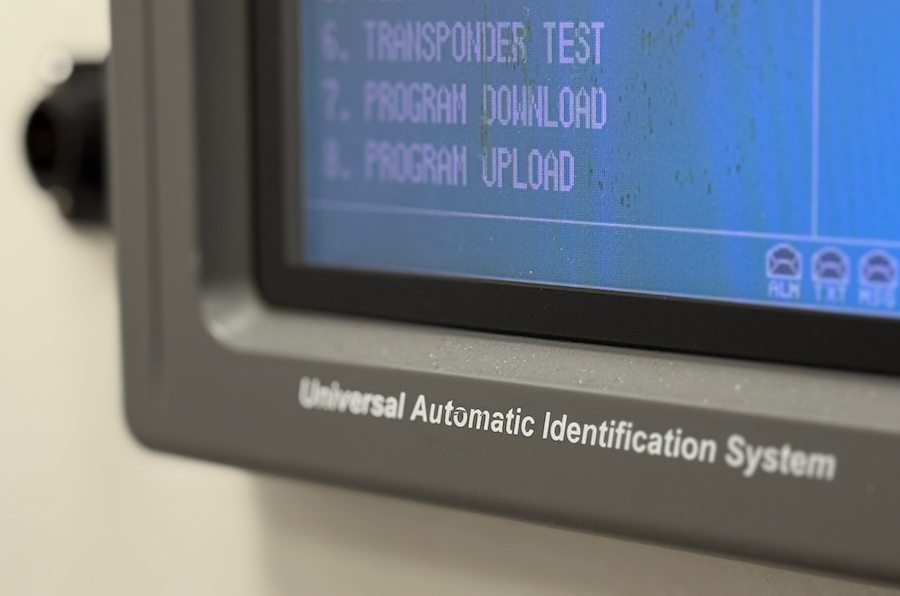
AIS transponders: why class matters
The Automatic Identification System (AIS) is a VHF-based system that automatically exchanges vessel data (identity, position, course, speed, etc.) between ships and shore stations.
For inspectors, the key point is simple: AIS is not just equipment installed onboard — it determines whether a vessel can be reliably detected and tracked.
This functionality is provided by AIS transponders. Their class (A or B) defines:
- how consistently the vessel appears in traffic
- what data is transmitted
- whether regulatory requirements are met
- how detailed the inspection needs to be
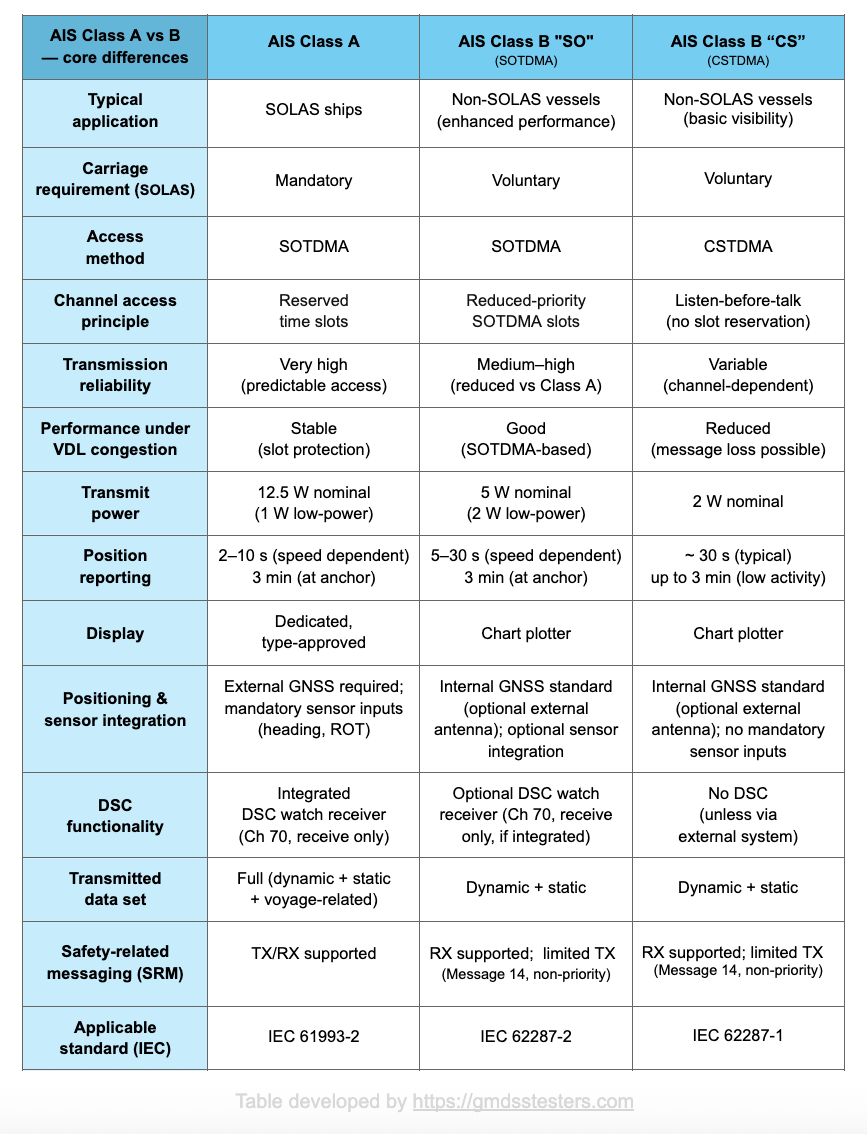
AIS Class A vs B — core differences
Technical comparison relevant for marine radio inspectors
Key insight:
Class A uses SOTDMA for predictable, prioritized transmission.
Class B relies on opportunistic channel access (CSTDMA or SOTDMA in Class B “CO”), which directly affects visibility under load.
Operational behavior — what inspectors should understand
Class A
- Periodic transmission using reserved time slots (SOTDMA)
- High, dynamic reporting rate (speed‑ and manoeuvre‑dependent), enabling reliable tracking
- Full AIS dataset, supporting traffic monitoring and management systems
- Stable performance in congested VHF environments, due to transmission priority
Class B
- Transmission depends on channel availability
- Lower transmit power, typically resulting in reduced effective range
- Lower and variable reporting rate
- Reduced data set compared to Class A
Important:
A Class B target not visible on AIS does not necessarily indicate a fault — it may result from channel congestion, transmission delays, or RF limitations.
Inspection context:
Operating conditions matter. In congested ports or high-traffic coastal areas, Class B performance may degrade due to channel load. In quieter RF environments, intermittent visibility is less likely and may point to installation or transmission issues.
Carriage requirements (SOLAS & beyond)
Mandatory carriage (Class A)
AIS Class A is required for:
- All ships ≥300 GT on international voyages
- Cargo ships ≥500 GT (non-international)
- All passenger ships (regardless of size)
Non-SOLAS vessels (Class B)
- Recreational vessels
- Small fishing vessels
- Coastal workboats
Generally not mandatory, but widely used for visibility.
Note:
Some flag states may extend AIS carriage requirements. In certain cases, they may allow Class B transponders in limited mandatory scenarios under specific conditions.
Inspection points — practical checklist
✅ General (applies to both Class A and Class B)
- MMSI correctly programmed
- Static data (name, call sign, dimensions) verified
- Position data valid (GNSS input confirmed)
- Transmission confirmed externally
- Reception verified
- Antenna condition and VSWR within acceptable limits
- No active alarms or fault indications
How to verify transmission in practice:
- Use an independent AIS receiver or approved tester
- Confirm that the target is visible with the correct MMSI and position
- Check that updates are received consistently for the vessel’s operating condition
- Do not rely only on local TX indication on the unit
✅ Class A specific checks (compliance-focused)
- Reporting intervals compliant with IMO-defined dynamic reporting rates
- Continuous automatic position reporting confirmed
- AIS safety-related (ASM) messaging capability verified
- Detection and correct interpretation of AIS-SART targets verified
- RF output power within specification
- Interfaces with external sensors verified:
- GNSS
- heading
- rate of turn (ROT), where applicable
Why it matters:
Class A is part of mandatory safety compliance — deficiencies may lead to detention.
What is not acceptable:
- Missing or invalid position data
- Incorrect static or voyage-related data
- Reporting behavior inconsistent with vessel status
- Transmission present, but data incomplete or non-compliant
✅ Class B specific checks (functionality-focused)
- Reporting intervals (including high-speed mode, where applicable) correct
- Correct operation in CSTDMA or SOTDMA mode (depending on device type)
- Transmission confirmed (target visible on independent AIS or tester)
- AIS safety messaging capability (if supported by the device)
- Antenna installation quality
- Output power sufficient for reliable detection
- Internal or external power backup (if applicable) operational
Key point:
For Class B, the focus is not formal compliance — but actual visibility and correct configuration under real operating conditions.
What to look for in practice:
- Delayed or inconsistent visibility
- Reduced detection range
- Incorrect static data
- Unstable performance caused by poor antenna installation, RF losses, or power supply issues
Typical inspection pitfalls
- “AIS is transmitting” ≠ AIS is compliant
- Class A operating without valid voyage data => non-compliant
- Class B installed where Class A is required
- Misidentified transponder class on small commercial vessels
- Poor antenna or RF path issues:
- reduced effective transmit power
- intermittent or lost visibility
- Incorrect MMSI or static data => false vessel identity in AIS network
Diagnostic logic:
- If a target is intermittently visible, check antenna condition, cabling, connectors, transmit power, and channel load
- If transmission is present but data is incomplete, verify GNSS input and connected sensor data
- If Class B performance appears weak in a congested area, consider channel access limitations before concluding that the unit is faulty
Why the distinction matters
Class A and Class B AIS transponders serve different operational roles.
Class A is designed for:
- safety-critical environments
- high traffic density
- predictable and prioritized transmission
Class B provides:
- basic situational awareness
- lower-cost visibility
- non-mandatory applications
Understanding this distinction allows inspectors to focus on parameters that directly affect navigational safety and regulatory compliance.
Field summary & inspection focus
In practice, inspecting AIS transponders means looking beyond checklists.
Class characteristics
- Class A — mandatory, predictable, high reporting rate, full dataset
- Class B — optional, variable transmission, lower priority, reduced dataset
Inspection priorities
- Verify Class A for regulatory compliance
- Verify Class B for actual detectability in real conditions
Quick assessment
- Class A not transmitting correctly => non-compliant
- Class A transmitting with invalid or incomplete required data => non-compliant
- Class B intermittently visible => verify conditions before concluding fault
- Incorrect identity or vessel data => always a defect
Key insight:
Systems may appear functional in ideal conditions but fail under load, RF interference, or high channel utilization.
Related test equipment
The AEROMARINE SRT product range includes dedicated tools for AIS inspection and verification:
- GMDSS Multi Tester MRTS-7 Pro
- GMDSS Multi Tester MRTS-7M
- AIS Tester M1





Be the first to comment